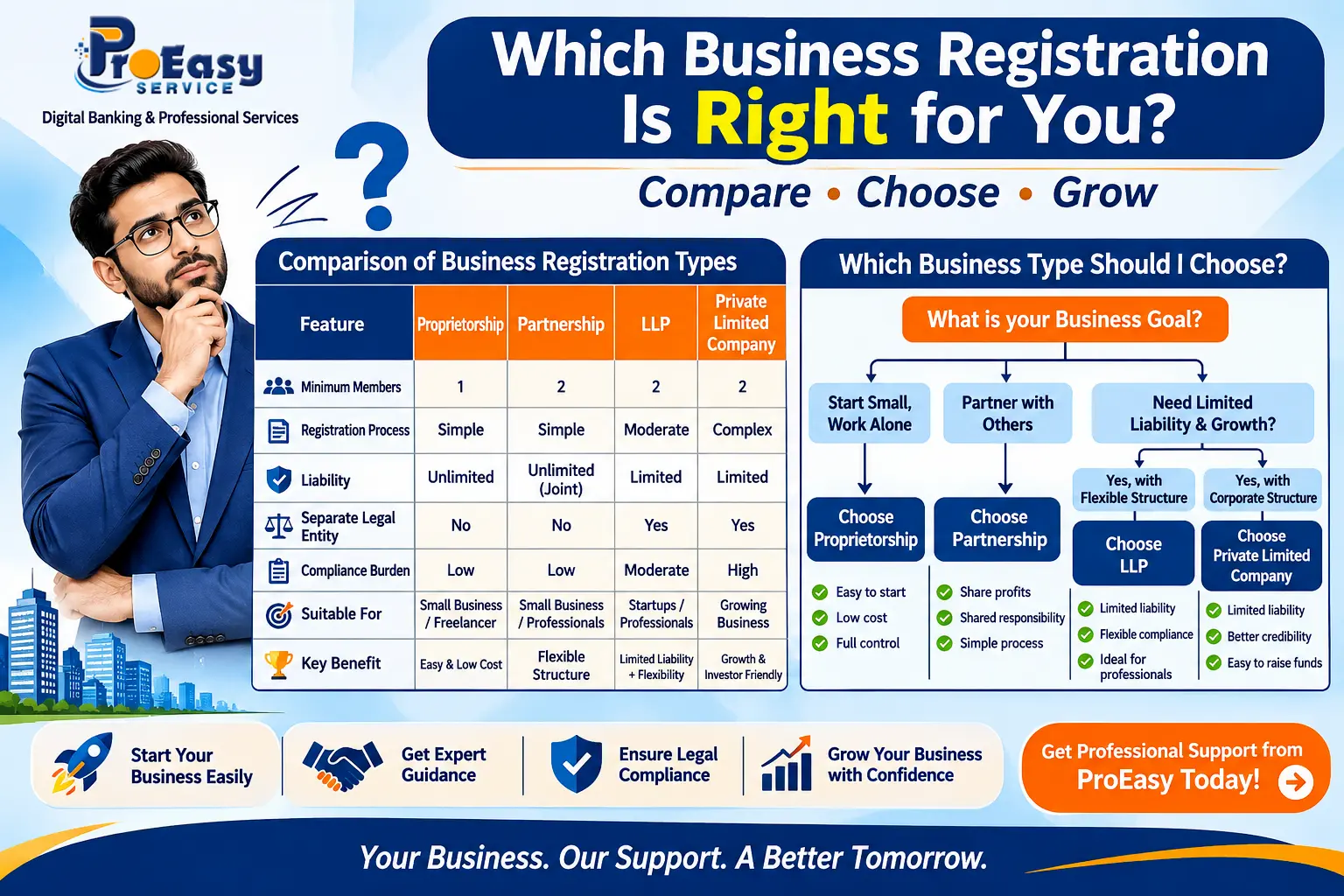


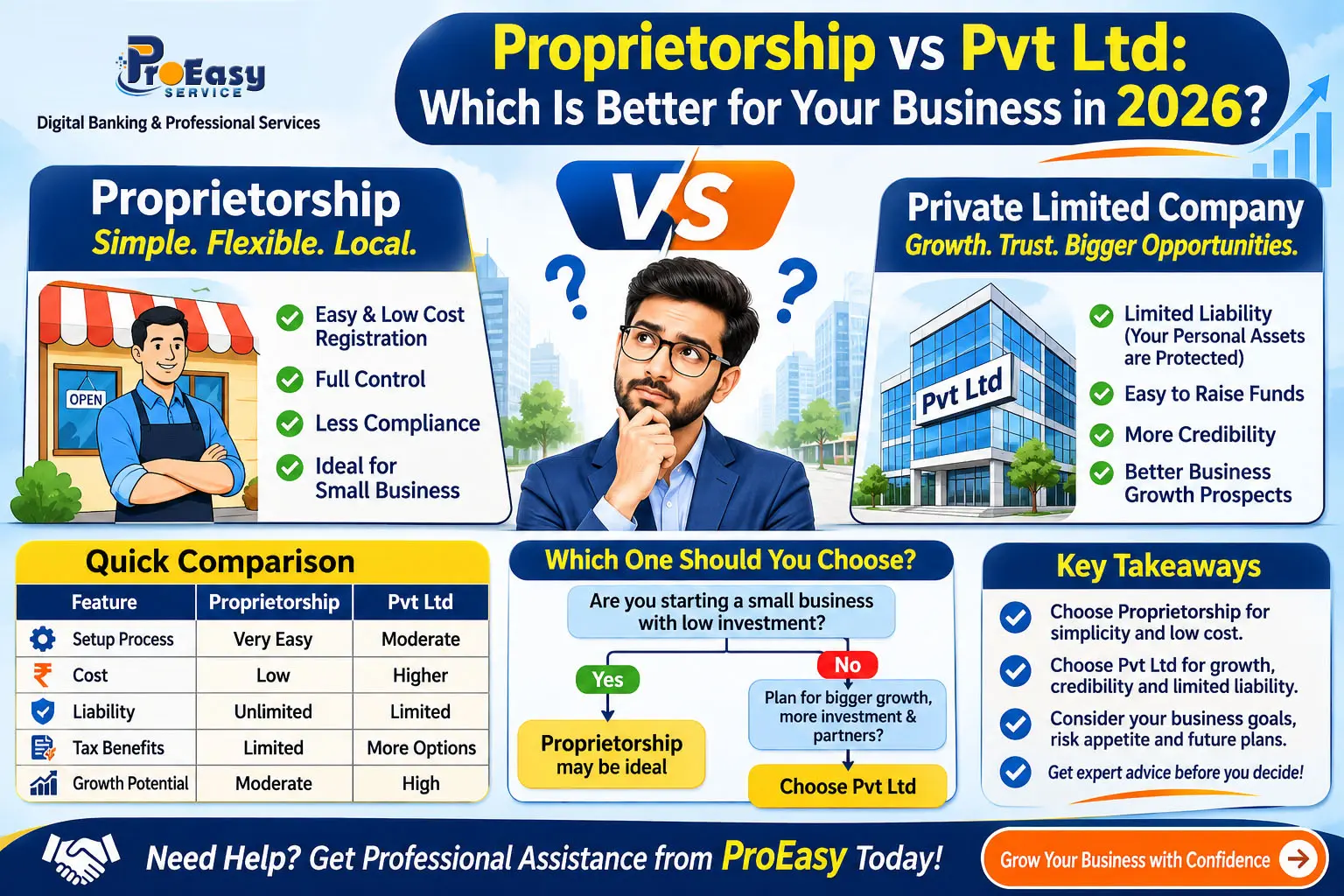
Proprietorship or Pvt Ltd? Compare cost, tax, liability, funding and compliance in simple words, and find out which one suits your business best.
“Should I just start as a proprietor, or register a company from day one?”
Almost every new business owner asks this. There is no single right answer, but there is a right answer for you. Let’s find it together.
Proprietorship: The business has no separate identity. If the business owes money, you owe it, and your personal assets can be at risk.
Pvt Ltd: The company is a separate legal entity. It can own property, sign contracts and take loans in its own name. In general, your personal assets are protected, and your risk is limited to your investment in the company.
Proprietorship
Pvt Ltd
Proprietorship: Business income is added to your personal income and taxed at your individual slab rates.
Pvt Ltd: The company pays tax at the corporate rate, which is generally lower for companies opting for the concessional regime (subject to conditions, surcharge and cess). Profits taken out as dividends are taxed again in the shareholder’s hands, and you can pay yourself a salary as a director, which is a business expense.
Which is cheaper depends on how much profit you make. Small earners often pay less as proprietors, while higher, growing profits often work better in a company. Ask an expert to run the numbers for your case.
A Pvt Ltd has more rules and a higher running cost. Missing company filings leads to penalties, so many owners hire a professional to manage them.
Proprietorship: Banks may give loans, but investors are very unlikely to invest in a proprietorship. Larger companies may also hesitate to sign big contracts with one.
Pvt Ltd: Investors can buy shares, you can offer ESOPs to your team, and big clients and tenders often prefer a company. Banks and partners also tend to trust it more.
Remember that sole proprietorships cannot apply for Startup India (DPIIT) recognition. A Pvt Ltd can.
A company name is registered and protected against another company using the same name. A proprietorship name does not get that exclusivity, so consider a trademark either way.
Proprietorship: Easy to close, but difficult to bring in partners or investors.
Pvt Ltd: The business continues even if an owner leaves or passes away, but closing it needs a formal process. You can also convert a proprietorship into a company later, though it takes planning and paperwork.
Choose a Proprietorship if:
Choose a Pvt Ltd if:
Popular path: Many owners start as a proprietor with an Udyam (MSME) registration, then convert to a Pvt Ltd when the business grows.
At ProEasy Service, you can register your business online, without running around:
👉 Start Your Business Registration
Which is cheaper, proprietorship or Pvt Ltd?
A proprietorship is cheaper to start and run.
Is Pvt Ltd compulsory for a business?
No. It is a choice, based on your goals.
Can I have a Pvt Ltd alone?
You need at least two directors and two shareholders. A One Person Company (OPC) is an option for a single owner.
Can I get a loan as a proprietor?
Yes, but the loan is in your name, and your personal assets are at risk if you can’t repay.
Can I switch later?
Yes, but plan the move early to keep your records, GST and licences in order.
Not sure which one fits you? Call the ProEasy team at +91 9337075353. We are happy to guide you.